Vitessce Link is a mixed reality and 2D display hybrid approach for visual analysis of 3D tissue maps
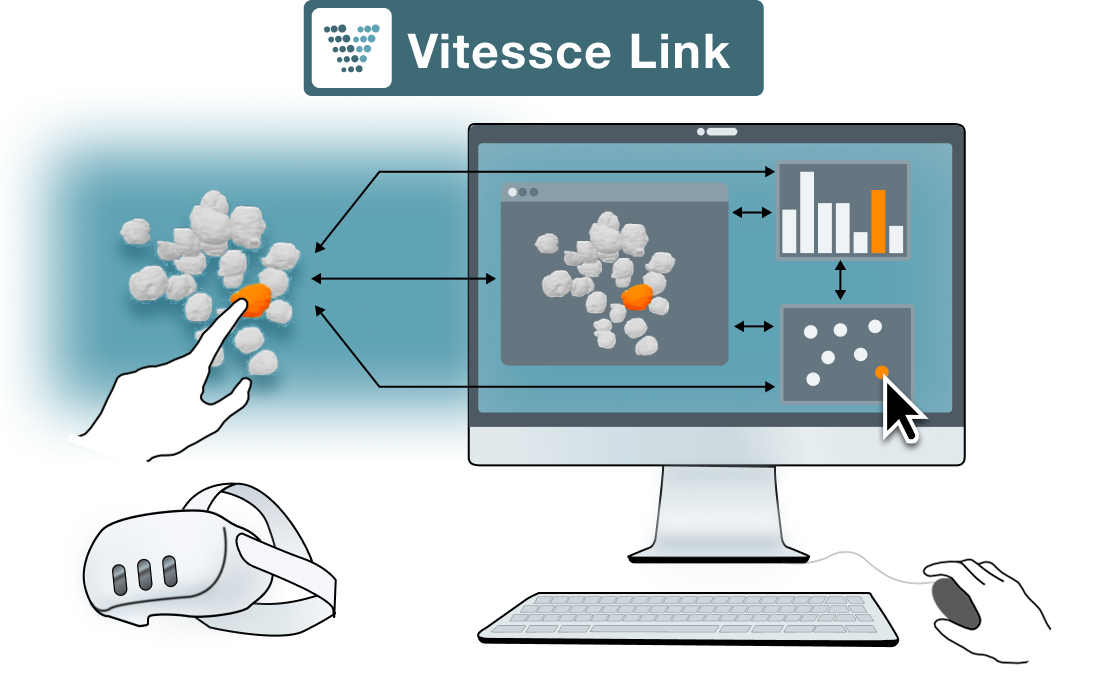
Vitessce Link enables exploration of spatially resolved 3D tissue maps using hand gestures and head movement in mixed reality headset, whereas controlling channels, thresholds, and filters is accomplished in a Vitessce instance on a laptop or desktop computer.
Built into the Vitessce platform, Vitessce Link supports integrated visualization of raw and processed spatial omics data and is compatible with both standard 2D displays and commercially available mixed reality headsets such as Meta Quest 3, Meta Quest Pro, Microsoft Hololens and others.
Vitessce Link in Action
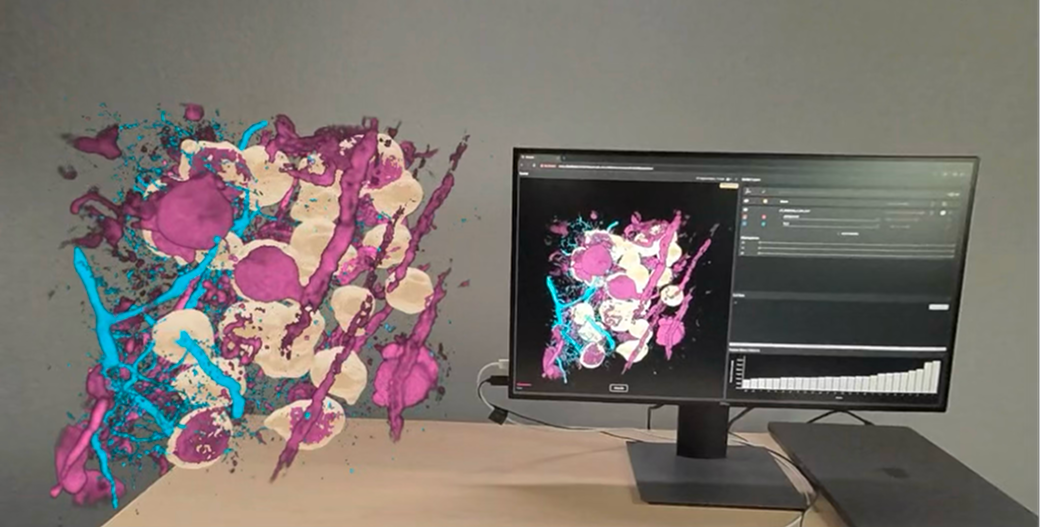
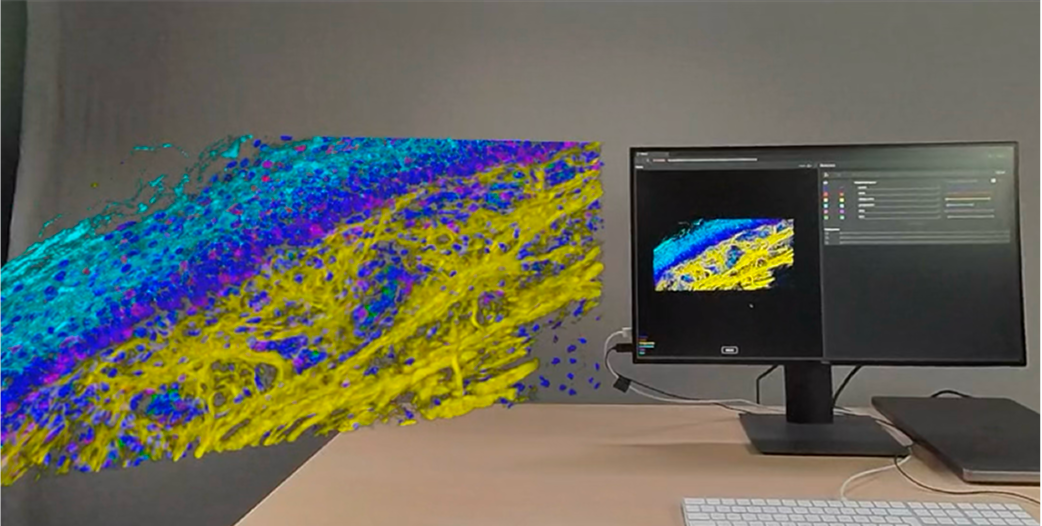
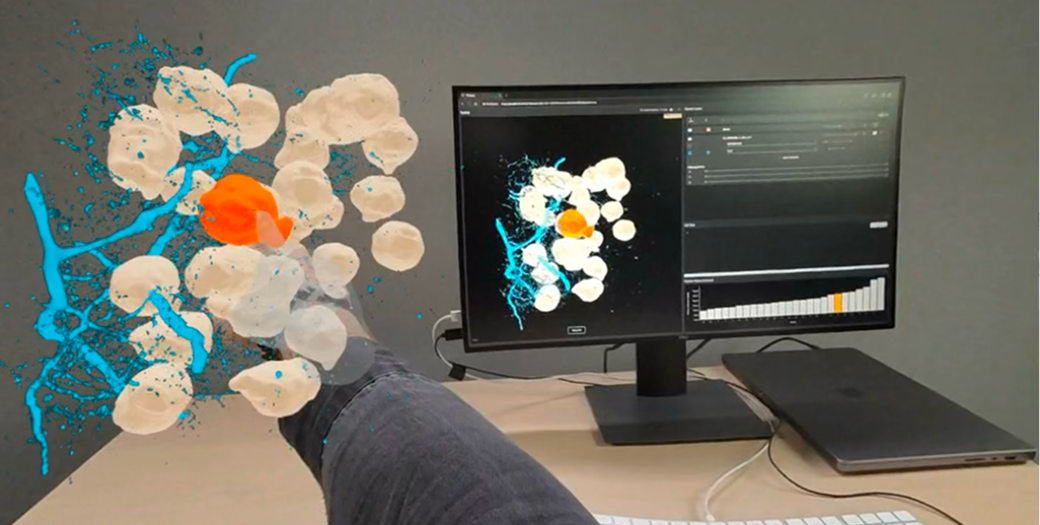
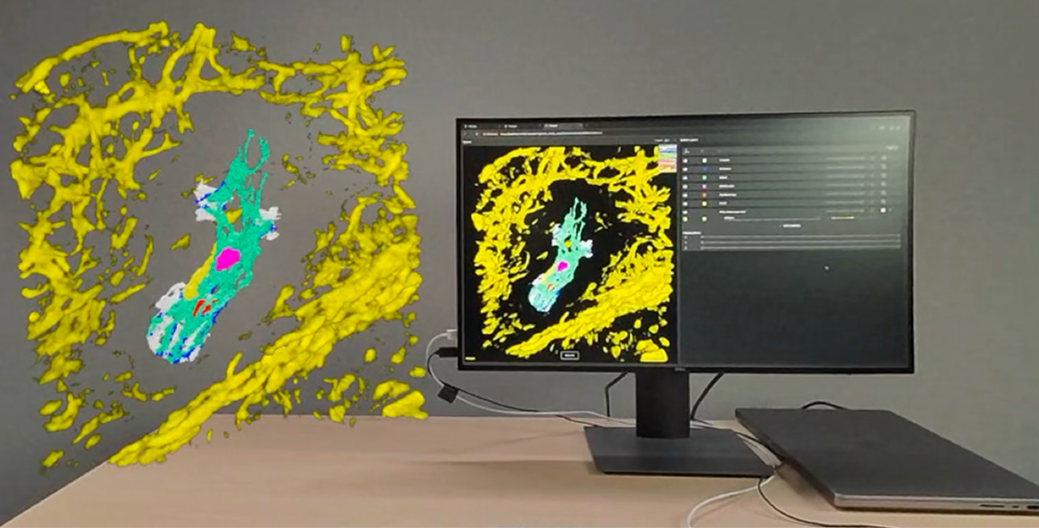
Video of the Approach
Your Analysis Journey, Reimagined
From Data to Discovery
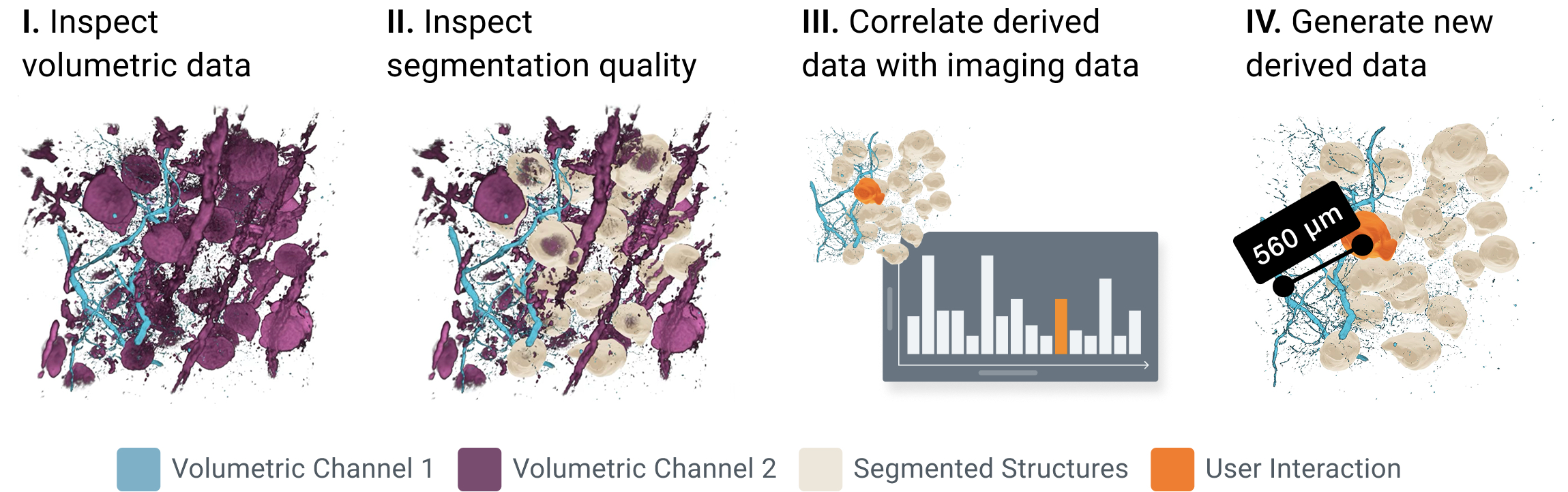
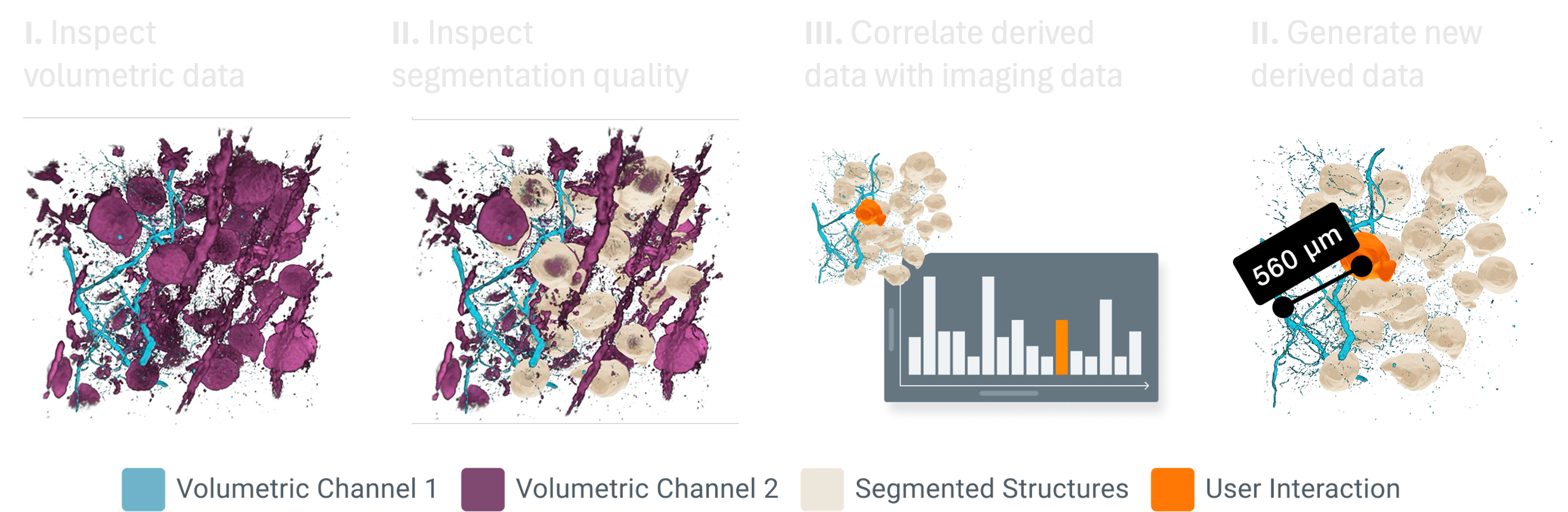
Our tool empowers domain experts to seamlessly move through the full analysis journey: from exploring rich volumetric data, to assessing segmentation quality, to uncovering correlations between derived and imaging data, and ultimately creating new insights interactively. Each step is designed to build on the last, turning complex data into discoveries with ease.
What do you need to get started?
Compatible with both standard 2D displays and commercially available mixed reality headsets such as Meta Quest 3, Meta Quest Pro, Microsoft Hololens and others.
Read the Preprint
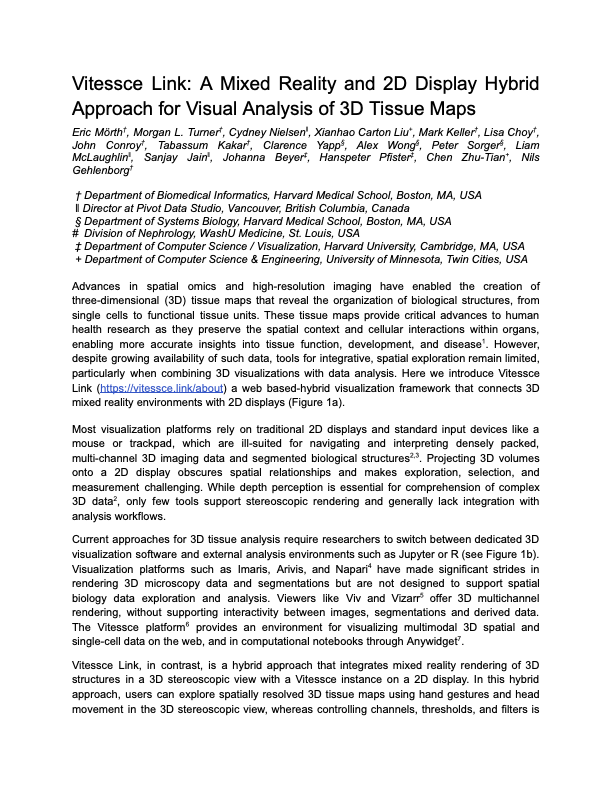
Vitessce Link: A Mixed Reality and 2D Display Hybrid Approach for Visual Analysis of 3D Tissue Maps
Mörth, E., Turner, M.L., Nielsen, C., Liu, X.C., Keller, M., Choy, L., Conroy, J., Kakar, T., Yapp, C., Wong, A., Sorger, P., McLaughlin, L., Jain, S., Beyer, J., Pfister, H., Zhu-Tian, C. & Gehlenborg, N.
arXiv preprint arXiv:2511.04262 [cs.HC] (2025) · DOI: 10.48550/arXiv.2511.04262
Advances in spatial omics and high-resolution imaging have enabled the creation of three-dimensional (3D) tissue maps that reveal the organization of biological structures, from single cells to functional tissue units. These tissue maps provide critical advances to human health research as they preserve the spatial context and cellular interactions within organs, enabling more accurate insights into tissue function, development, and disease1 . However, despite growing availability of such data, tools for integrative, spatial exploration remain limited, particularly when combining 3D visualizations with data analysis. Here we introduce Vitessce Link a web based-hybrid visualization framework that connects 3D mixed reality environments with 2D displays (Figure 1a).
Read the Preprint